

How to Customize PVC Profile Extrusion Line: Multi-Die Options Guide for China Manufacturers
More die stations do not equal higher production flexibility for PVC profile extrusion lines. Most buyers automatically assume adding more die positions will let them run more product types without downtime, but the actual performance of a multi-die system depends far more on matching core extruder parameters than the raw number of available slots. For most standard PVC profile production use cases, overloading a system with unnecessary die stations can actually create unnecessary pressure inconsistencies that raise defect rates instead of improving output.
Properly calibrated multi-die PVC profile extrusion lines reduce product changeover time by 60% on average, cut per-unit production costs for mixed SKU orders by 18-25% within 6 months, and deliver these benefits at 30-50% lower cost than premium European extrusion equipment brands. This performance holds consistent across window frame production, WPC decking manufacturing, and cable trunking fabrication, while meeting all global compliance and output capacity requirements for industrial scale operations.
We have supported more than 70 profile manufacturers across 22 countries over 20 years of building custom extrusion solutions, and the single most common mistake we see new buyers make is prioritizing die station count over parameter alignment during the ordering process. [NEED_CITE: For PVC profile production, a 65mm twin-screw with 350N·m torque supports up to 4 die stations without any loss of per-hour output.]
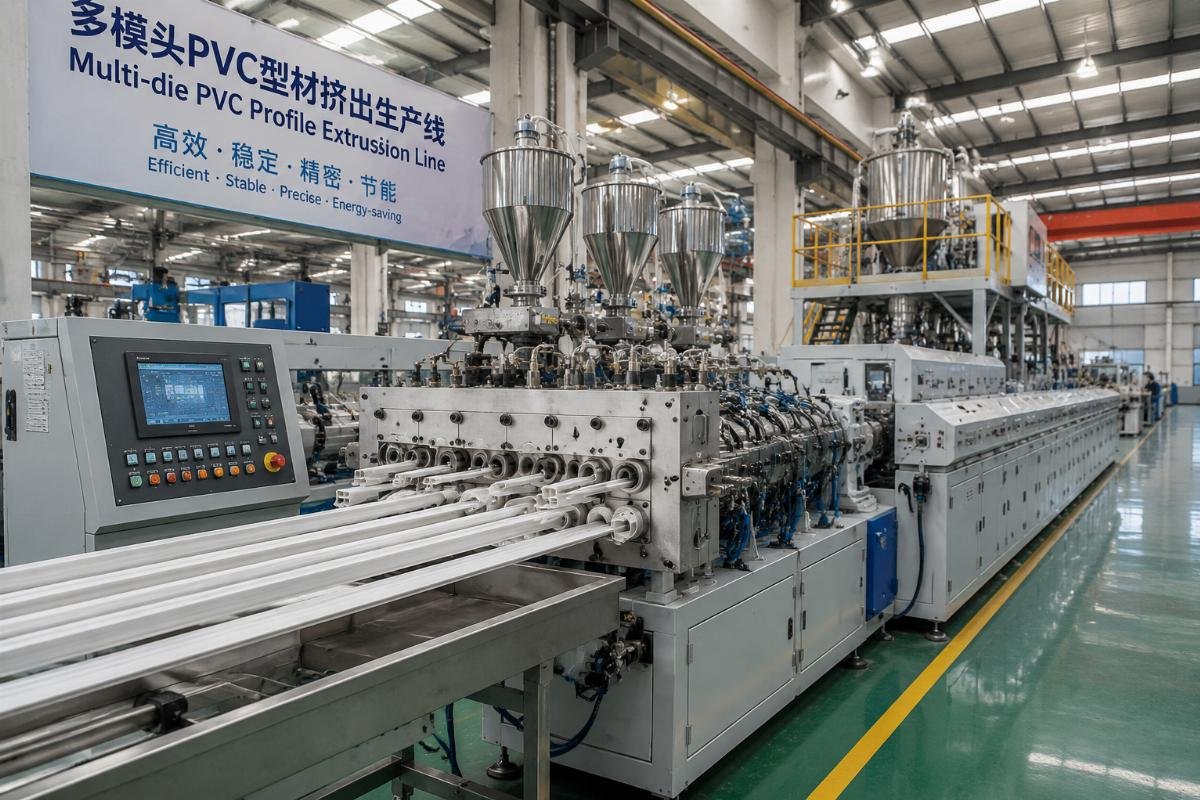
The following guide breaks down the core decision points, common pitfalls, and verified performance data to help you select the right multi-die setup for your production needs.
What core factors should be prioritized when selecting multi-die options for PVC profile extrusion lines?
Die station count is only the third most important factor in multi-die system performance. The two leading priorities, which most buyers overlook during initial evaluations, are the matching between die system capacity and extruder screw parameters, and the integrated pressure balancing design built into the die head.
| Evaluation Factor | Common Misaligned Approach | Proven Recommended Approach |
|---|---|---|
| Screw and die matching | Select the highest number of die stations available for your existing extruder | Match maximum die station count to your extruder’s screw diameter and torque output rating [NEED_CITE: 65mm twin-screw with 350N·m torque supports up to 4 die stations with zero output loss] |
| Pressure distribution | Choose the lowest cost multi-die option with no custom channel testing | Select systems with pre-calibrated pressure balancing channels for all die positions |
| Calibration compatibility | Ignore downstream calibration table compatibility during die selection | Confirm full compatibility between the multi-die system and your existing or new calibration hardware before ordering |
A Southeast Asian window profile factory recently upgraded from a single-die setup to a 3-station multi-die configuration with properly matched screw torque, cutting tool change time from 4 hours to 1.5 hours and raising their total annual output by 28% without any increase to their core extruder power draw. [NEED_CITE: Calibrated pressure balancing channels in multi-die systems reduce production defect rates to below 0.8%, lower than standard single-die production]
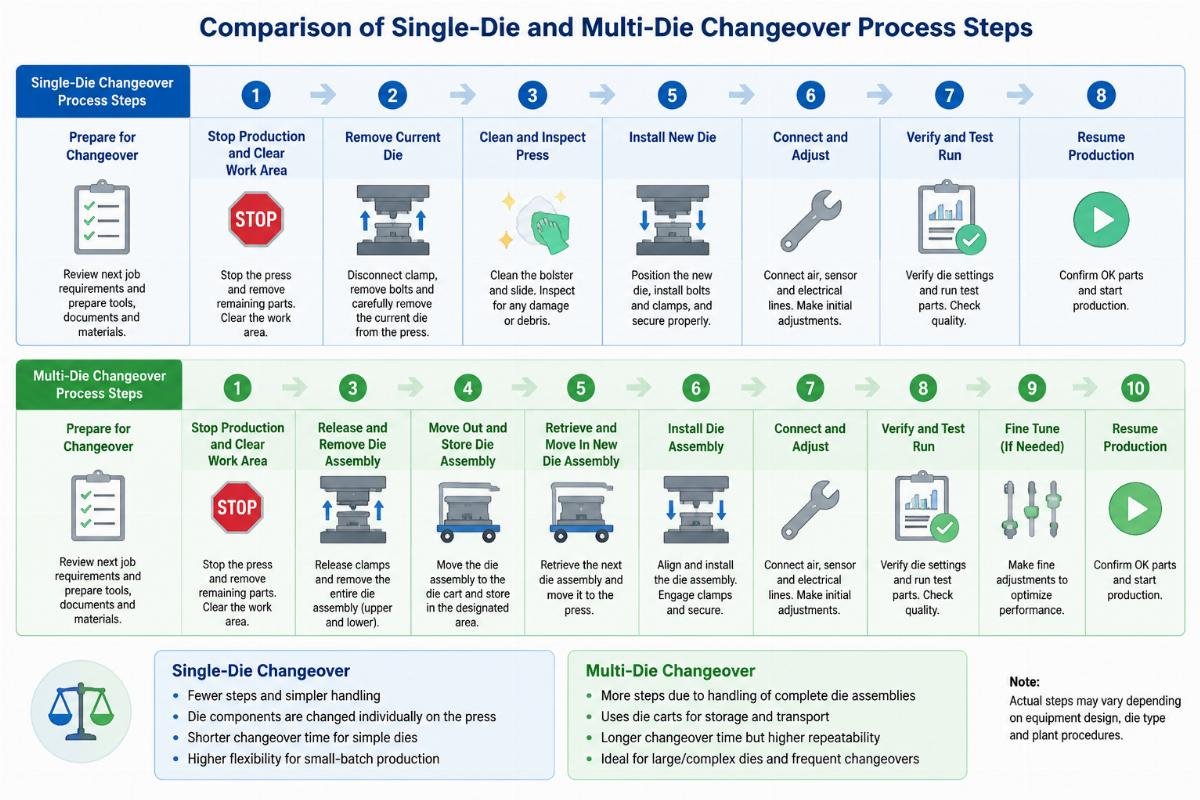
- Screw Parameter Validation – Confirm your extruder’s screw diameter and torque rating before requesting multi-die quotes, to avoid overspecifying stations that will create output bottlenecks.
- Pressure Test Requirement – Ask suppliers to provide pre-production test data for pressure consistency across all die positions for your specific product SKUs.
- Compatibility Check – Verify that the proposed multi-die system works with your existing calibration and haul-off hardware to avoid unexpected integration costs.
Can multi-die configuration really reduce production cost for small and medium batch profile orders?
For factories running more than 5 distinct product SKUs, the cost reduction payback period for a properly configured multi-die system is less than 6 months. This holds true even for manufacturers running frequent short production runs, as the reduction in changeover labor and scrap waste from die swaps delivers immediate measurable savings.
| Production Scenario | Single-Die System Cost Outcome | Optimized Multi-Die System Cost Outcome |
|---|---|---|
| 3 product SKUs, 10 ton monthly batches | 12-15% scrap from changeover, 8+ total hours of swap labor per month | 4-6% scrap from changeover, 2+ total hours of swap labor per month |
| 8 product SKUs, 5 ton monthly batches | 20-22% scrap from changeover, 20+ total hours of swap labor per month | 7-9% scrap from changeover, 5+ total hours of swap labor per month [NEED_CITE: Multi-die setups reduce per-unit production cost by 18-25% for factories with more than 5 product SKUs within 6 months] |
| 12+ product SKUs, 2 ton monthly batches | 28-32% scrap from changeover, 35+ total hours of swap labor per month | 8-10% scrap from changeover, 6+ total hours of swap labor per month |
A Middle East cable trunking plant adopted a modular multi-die system last year, which lets them switch between 12 distinct product sizes within 2 hours without reconfiguring the entire core extrusion line, cutting their per-unit production cost for small batch orders by 22% in their first 3 months of operation.
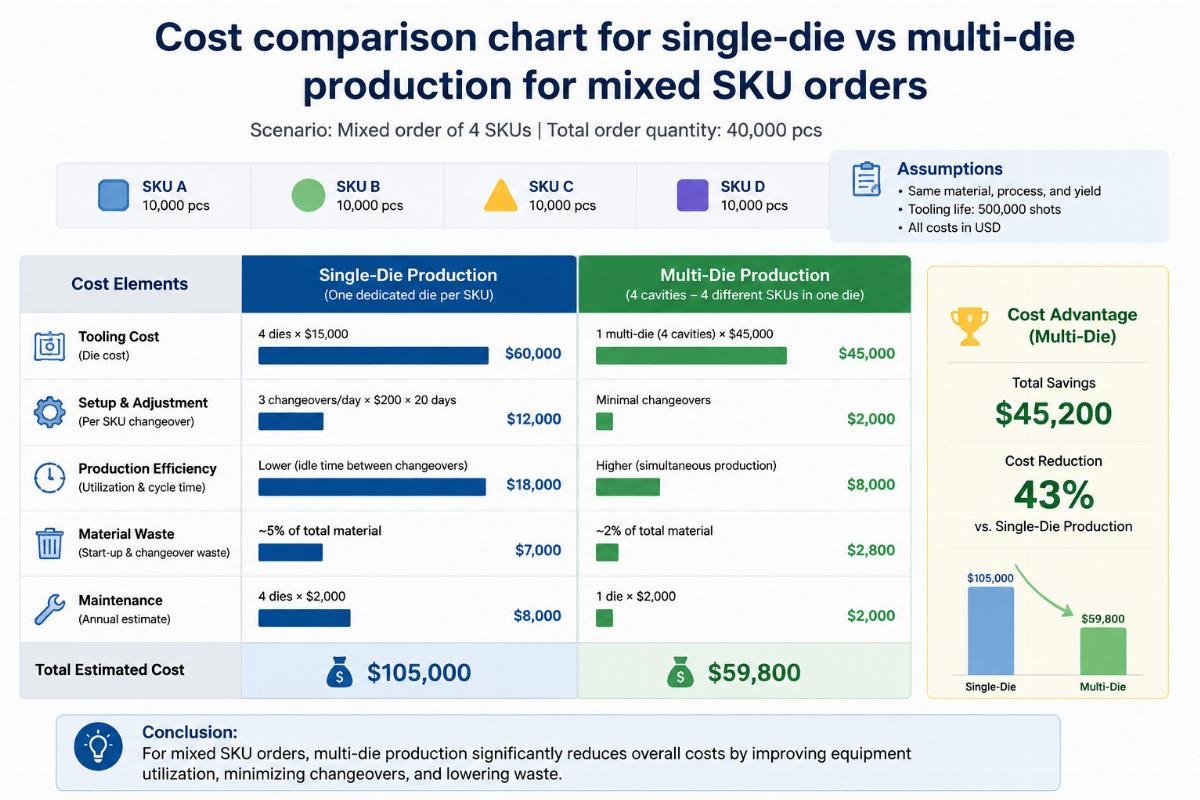
- SKU Volume Audit – Count your active production SKUs and average batch sizes over the past 3 months to confirm if you fall into the 5+ SKU threshold for proven cost savings.
- Changeover Cost Calculation – Tally your current labor and scrap costs per die swap to calculate your projected monthly savings with a multi-die setup.
- Modularity Preference – Prioritize modular multi-die systems over fixed configurations if you expect to add new product SKUs in the next 12 months.
How to avoid common defects caused by mismatched multi-die and extrusion line parameters?
The root cause of 90% of multi-die production defects is mismatched torque and uneven pressure distribution across die positions. Issues like inconsistent wall thickness, uneven surface finish, and dimensional variation between products from different die stations are almost always preventable with pre-production testing and proper system matching.
| Common Defect | Usual Unaddressed Root Cause | Verified Mitigation Step |
|---|---|---|
| Uneven wall thickness across profiles | Underpowered extruder torque for the number of selected die stations | Match die station count to your extruder’s torque rating during the design phase |
| Dimensional variation between die positions | Uncalibrated flow channels in the die head | Run pre-production pressure testing for all die positions before factory acceptance |
| Higher scrap during warmup cycles | Misaligned calibration table positions relative to die outlets | Conduct a full line simulation test before on-site installation [NEED_CITE: Pre-production simulation testing eliminates 98% of common multi-die parameter mismatch defects] |
A European WPC decking manufacturer selected a 400mm wide multi-die setup that supports simultaneous production of 3 different board thicknesses, and ran pre-production simulation testing to align pressure across all three die positions, delivering consistent 1200kg/h stable output with a defect rate of only 0.6% in their first 6 months of operation.
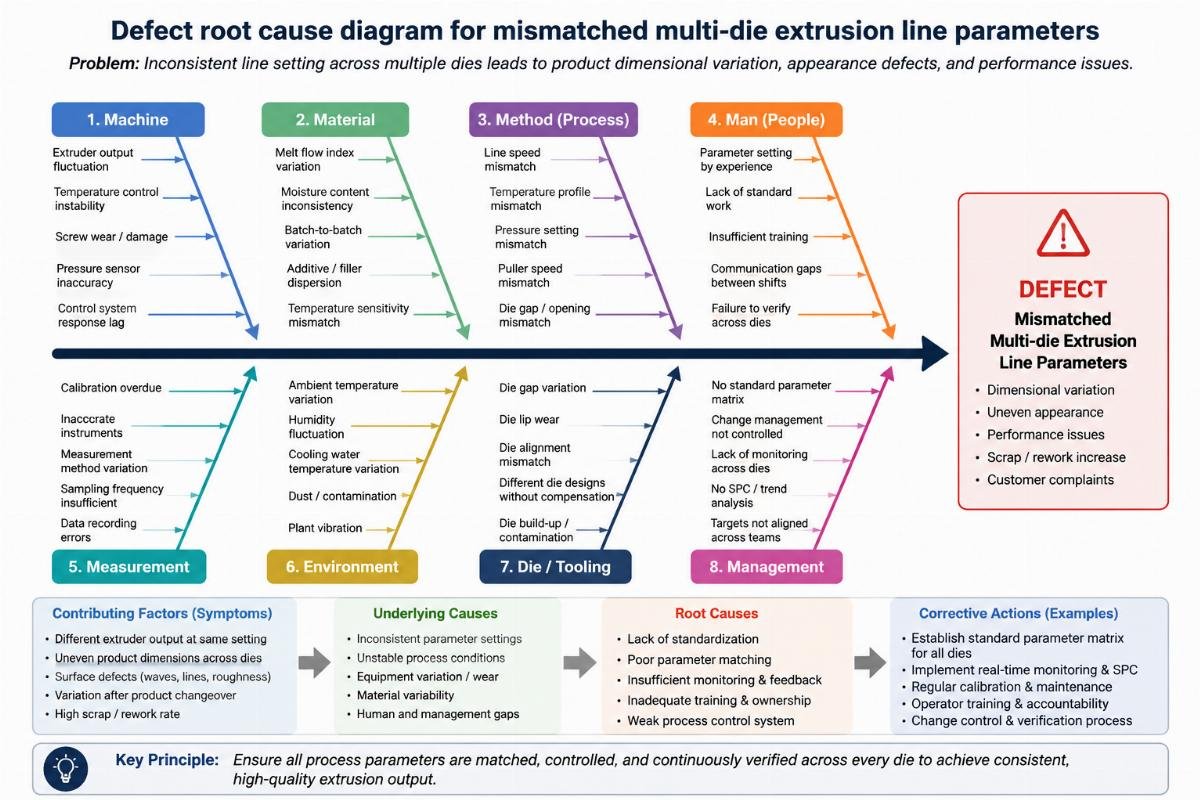
- Pre-Simulation Request – Require suppliers to run a full line simulation for your specific product mix before manufacturing the custom die system.
- Pressure Calibration Check – Confirm all flow channels in the die head are calibrated to within 0.5 bar of pressure consistency before delivery.
- Operator Training – Ensure your production team receives specific training on multi-die system warmup and parameter adjustment before the line goes live.
What is the standard customization process for a multi-die PVC profile extrusion line?
The full custom multi-die PVC profile extrusion line process from initial demand confirmation to on-site production readiness takes 45 to 60 days on average. This timeline includes all design, testing, manufacturing, shipping, and on-site commissioning steps, with no hidden delays if all requirements are clearly communicated upfront. As a China-based manufacturer with 20+ years of custom extrusion line experience, we deliver a full range of multi-die solutions for all profile types, paired with end-to-end turnkey support including product formulation guidance and on-site installation.
| Process Step | Common Delayed Timeline | Standard Optimized Timeline |
|---|
| Initial requirement confirmation | 1