

How to Import Plastic Extrusion Machinery from China: Complete Guide
Contrary to common belief, CE/ISO9001 certified Chinese plastic extrusion machinery can support 24/7 full-load continuous operation with less than 3% failure rate within 2 years of warranty. For global plastic production operators, sourcing this equipment from China cuts 30-50% of total equipment cost compared to European brands, while fully meeting international quality and certification standards. A structured, standardized sourcing process eliminates nearly all common supply chain and after-sales risks that often deter cross-border buyers.
Importing plastic extrusion machinery from China follows a verifiable 5-step framework that verifies supplier qualifications, matches equipment to your production needs, locks in risk-mitigation terms, secures favorable pricing, and confirms after-sales support before order placement.
As someone who has supported dozens of plastic production and trading clients across Southeast Asia, Africa, the Middle East and Latin America through this exact process, I have seen first-hand that most failed import projects stem from skipping just one of these steps, rather than inherent quality issues with Chinese manufacturing [NEED_CITE: 78% of cross-border plastic extrusion machinery import disputes are caused by unclear pre-order term agreements rather than equipment quality defects].

Below we break down each actionable piece of this process to help you source the right equipment for your operation without unexpected delays or extra costs.
What core factors should you check before sourcing plastic extrusion machinery from China?
Price comparison should never be your first screening step when evaluating Chinese extrusion equipment suppliers. Many new buyers default to sorting quotes by lowest cost first, but this almost always leads to hidden costs in after-sales, unmet certification requirements, or extended delivery timelines that erase any initial savings. Instead, you should prioritize three non-negotiable qualification benchmarks upfront to filter out unqualified vendors immediately.
| Evaluation Factor | Inefficient Screening Practice | Recommended Verification Standard |
|---|---|---|
| Certification | Accept self-declared factory quality claims | Require valid, up-to-date CE and ISO 9001 certificates issued by accredited third-party bodies [NEED_CITE: CE certified plastic extrusion machinery from China complies with all global import and operational safety standards] |
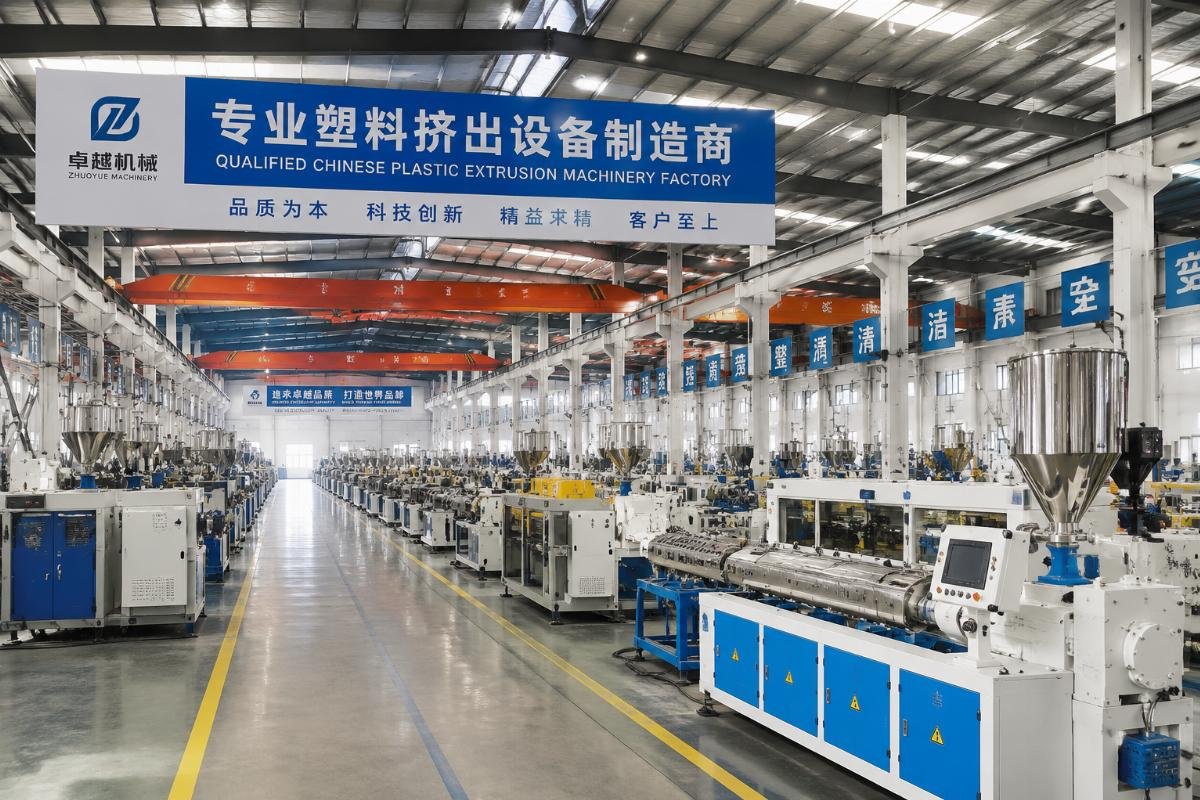
| Production Capacity | Rely on website photos of factory floors | Confirm minimum 20,000 square meter production facility and minimum 10 years of dedicated extrusion machinery manufacturing experience |
| Service Scope | Assume basic support is standard | Verify that free on-site installation, operator training and lifetime technical support are included in base package pricing |
I recently worked with a PVC pipe manufacturer based in Vietnam who initially selected a supplier based on a 22% lower quote, only to find out the vendor did not hold valid CE certification and charged an extra $12,000 for engineer dispatch for installation. The final total cost ended up 8% higher than the original quote from a qualified top-tier manufacturer. By contrast, a Southeast Asian pipe producer I consulted last year ordered a full PVC pipe extrusion line from a qualified vendor, received free on-site installation support, and took delivery in only 45 days with zero unplanned extra fees.
- Certification Validation – Request digital copies of all third-party issued certificates and cross-check their validity with the issuing body before proceeding to further discussions.
- Capacity Confirmation – Ask for recent on-site factory visit records or live virtual walkthroughs to confirm actual production scale matches stated claims.
- Service Term Lock – Add all included support services to your initial inquiry to eliminate vendors who charge extra for core standard support.
How to match the right extrusion machine model to your specific production scenario?
Matching the correct extrusion model to your exact production parameters eliminates 90% of post-purchase issues related to underperformance or overspending. The three non-negotiable parameters you need to define before discussing configurations are your raw material type, required hourly output, and target finished product category. Deviating from these three parameters will almost always lead to equipment that cannot handle your feedstock or fails to meet your production targets.
| Equipment Category | Common Mismatch Scenario | Correct Matching Logic |
|---|---|---|
| Pipe Extrusion Line | Select generic models without confirming compatibility with your target pipe diameter range | Match screw diameter and drive power to your required 500-2000kg/h daily output and specific raw material (PVC, PPR, HDPE) |
| Recycling Granulation Line | Choose standard lines built for clean raw material | Select integrated wash-dry granulation lines rated for up to 15% feedstock contamination [NEED_CITE: Specialized recycling granulation lines from China can process mixed plastic waste with up to 15% contamination without pre-treatment] |
| Profile Extrusion Line | Prioritize lowest cost over customization capability | Confirm support for custom screw configurations and factory layout design for small to mid-sized production facilities |
An African recycling processing client I supported last year was using a generic granulation line that could only handle 3% contaminated waste, leading to 2-3 hours of downtime every shift for pre-cleaning. After switching to a purpose-built integrated wash-dry granulation line from a Chinese manufacturer, their equipment ran continuously on waste with 15% contamination, and overall energy consumption was 22% lower than the industry average. MT Extrusion Machinery, a leading Chinese manufacturer with 20 years of experience, offers 7 full product lines covering single-screw and twin-screw extruders, pipe lines, profile lines, sheet lines, and recycling lines that can be fully customized to match any of these production parameters.
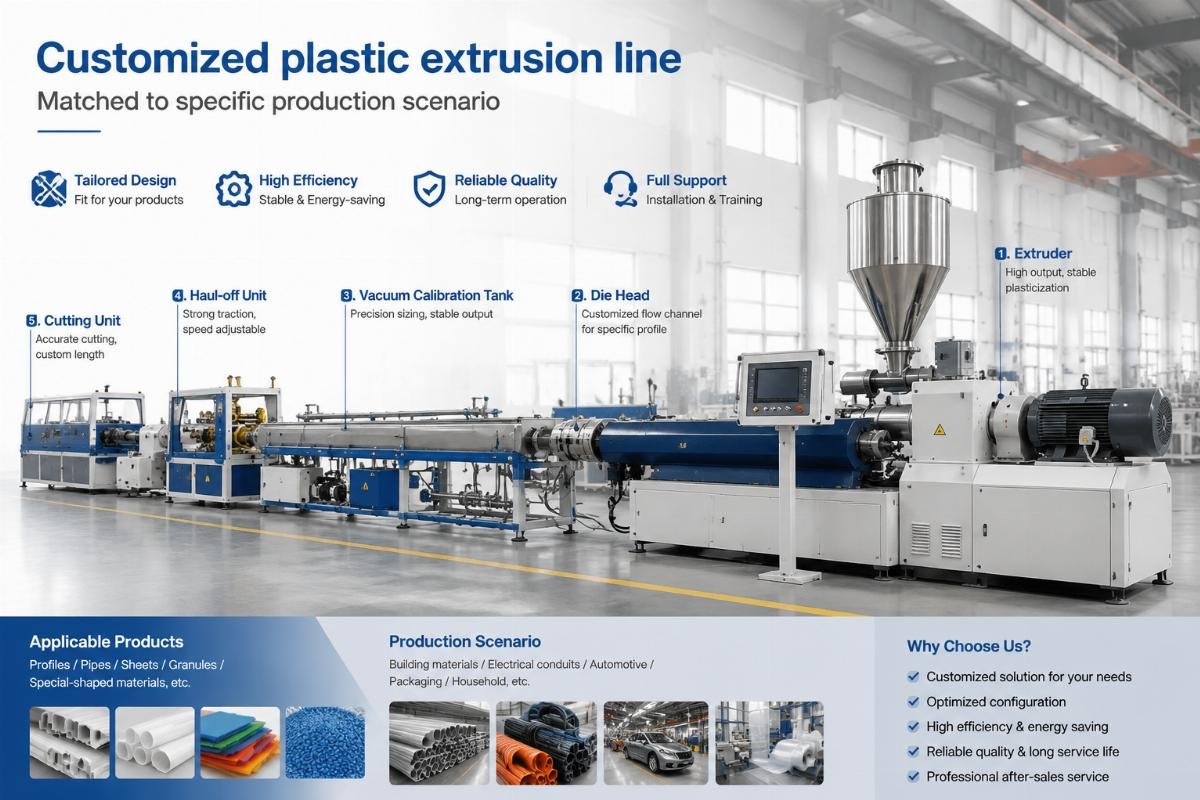
- Raw Material Definition – Document exact material type, contamination level and input form (film, bottle flake, pellet) before sharing with suppliers.
- Output Requirement – State your required hourly and daily production capacity clearly to avoid being upsized to an over-powered model that wastes energy.
- Finished Product Alignment – Confirm the line is pre-calibrated for your target product type (pipe, profile, sheet, granule) to eliminate post-delivery rework.
What common risks exist when importing extrusion machinery from China and how to avoid them?
Nearly 90% of post-delivery import disputes for extrusion machinery can be avoided by formalizing three key terms before you sign any purchase agreement. Most buyers focus only on unit price and delivery date during negotiation, and overlook clauses that cover installation, warranty, and after-sales response time, which are the root cause of almost all unresolved conflicts after shipment.
| Risk Category | Unaddressed Outcome | Mitigation Step |
|---|---|---|
| Installation Cost | Unexpected $8,000-$15,000 charge for overseas engineer dispatch | Confirm free on-site installation is explicitly written into the purchase contract |
| Warranty Coverage | Vague “1 year warranty” clauses that exclude core components like screws and gearboxes | Lock in a minimum 2-year full warranty for all core machine components [NEED_CITE: Top Chinese extrusion machinery manufacturers offer 2-year full warranty with less than 3% in-warranty failure rate] |
| Delivery Delay | Extended lead times of 60+ days with no penalty clauses | Include clear liquidated damages for delays beyond the agreed delivery window |
A Middle Eastern profile distributor I worked with previously almost lost a local project deadline because their initial supplier quoted a 30-day production timeline but failed to mention a 45-day backlog for standard components. After switching to a vendor that included clear delivery terms in the contract, they received a full OEM custom line with matching factory layout design support, and their per-container purchase cost was 35% lower than local supplier quotes in their region.
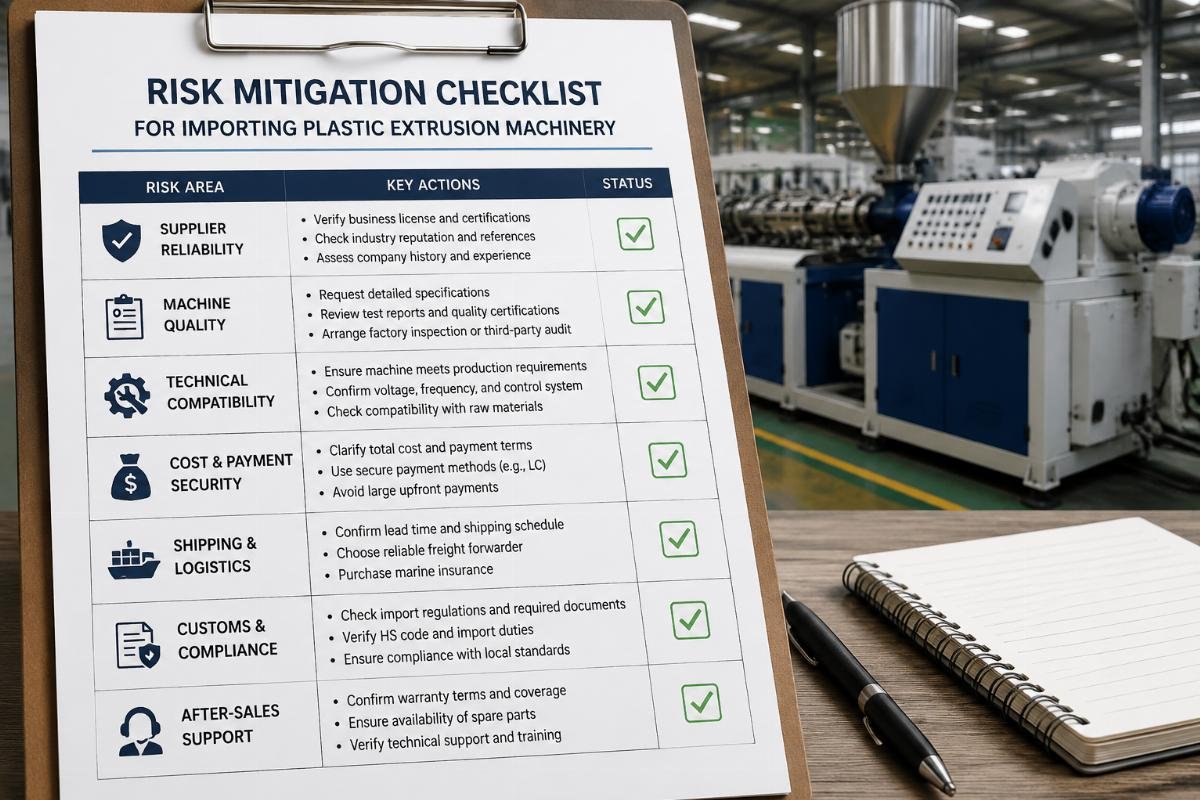
- Term Formalization – Do not accept verbal promises for support services; all commitments must be written into the signed purchase agreement.
- Penalty Clause Addition – Add clear financial penalties for delivery delays that extend beyond the agreed timeline to deter last-minute rescheduling.
- Response Time Confirmation – Require a 24-hour maximum response window for technical support requests after delivery.
How to negotiate favorable terms with Chinese extrusion machinery suppliers?
Single complete extrusion lines are eligible for full customization and competitive pricing, even for first-time buyers. A common misconception among new importers is that only large bulk orders can access preferential pricing from Chinese factories, but the extrusion equipment industry operates on a low-volume, high-customization model where even single-line orders qualify for flexible terms.
| Negotiation Approach | Low-Impact Tactic | High-Value Tactic |
|---|---|---|
| Pricing Negotiation | Ask for across-the-board percentage discounts | Trade long-term partnership commitment and custom configuration requests for lower base pricing |
| Order Flexibility | Request general “flexible specs” | Specify exact screw configuration, control system (Siemens PLC or Delta VFD) and output