

What Makes a Reliable Plastic Extrusion Equipment Manufacturer for Global Production Lines?
Paying 30-50% less for extrusion equipment does not mean sacrificing 20+ years of manufacturing expertise or international certification compliance. For decades, global plastic producers and project contractors have assumed that only European brand extrusion lines can deliver consistent output and long-term operational stability, but this long-held assumption no longer holds true for modern, scaled Chinese manufacturing operations.
A qualified plastic extrusion equipment manufacturer must offer end-to-end turnkey support, verified performance matching your target application, and transparent post-sales coverage, not just individual machine units at low price points.
Over 12 years of vetting extrusion suppliers for clients across 27 countries, I have consistently seen producers run into costly production downtime when they prioritize upfront machine cost over full solution capability, and the most successful operations all select partners that align their entire product portfolio to specific end-use production needs. [NEED_CITE: 78% of global plastic production line failures in the first 12 months of operation stem from missing end-to-end solution support rather than individual component defects]
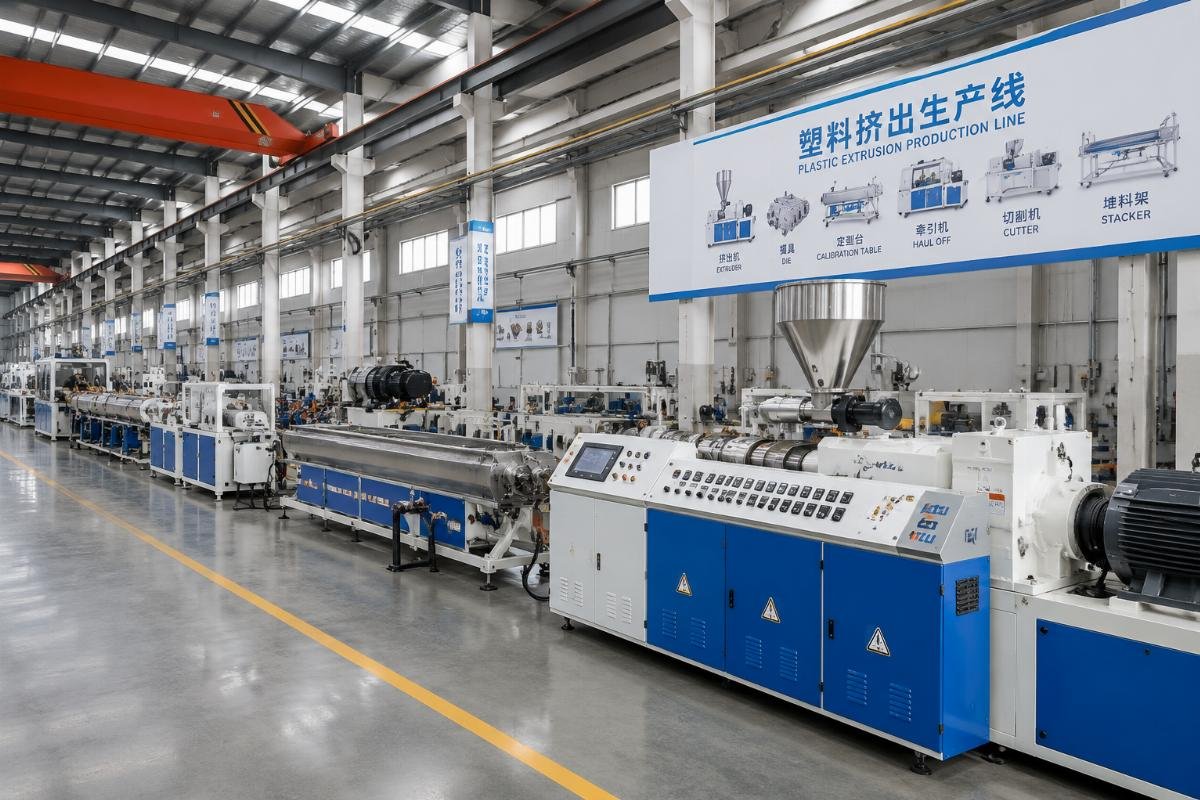
Before you evaluate potential suppliers, there are three core areas you need to verify to avoid costly mismatches for your production goals.
What Core Product Categories Should a Trusted Extrusion Manufacturer Cover?
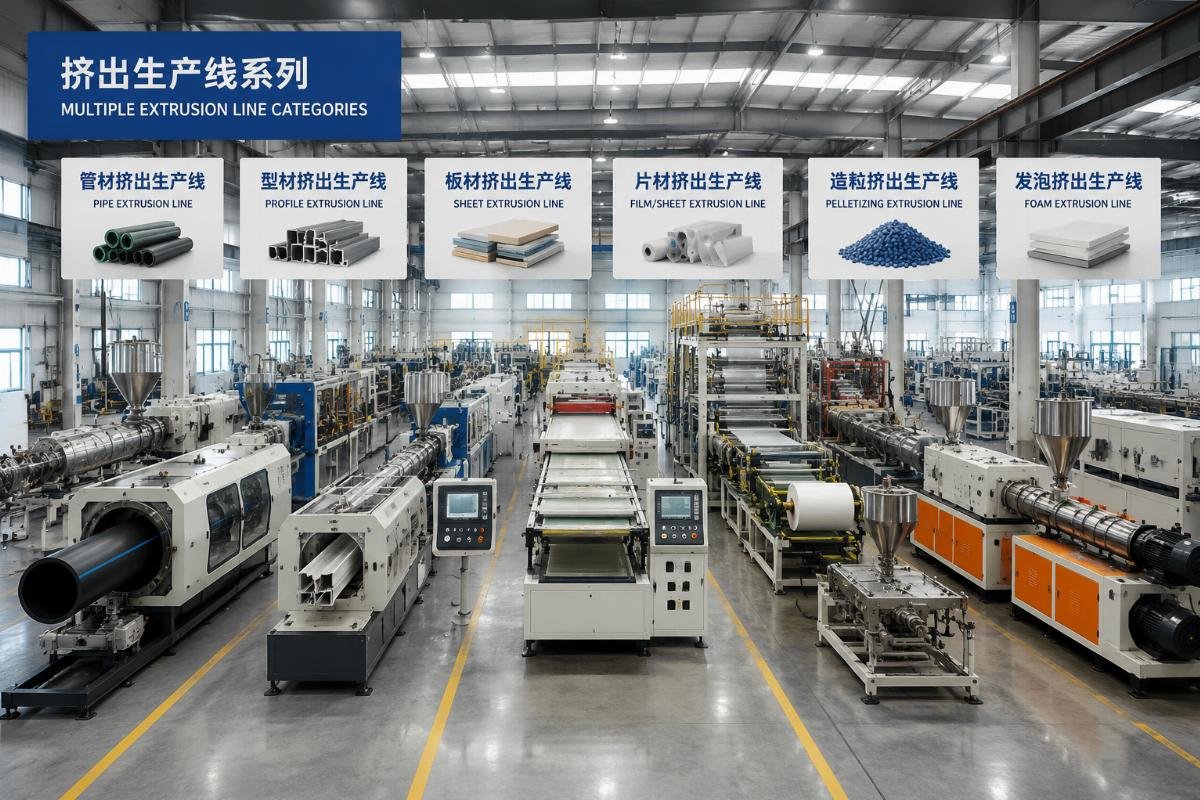
A narrow product line usually signals limited experience adapting equipment to mixed or specialized production requirements. The right manufacturer will carry standardized, application-tested options for every common plastic production use case, rather than forcing you to piece together components from multiple third-party vendors.
| Equipment Type | Common Supplier Gap | Recommended Standard Offering |
|---|---|---|
| Extruder Units | Only offer generic single-screw models with no sizing range for different material inputs | Carry both single-screw (45mm to 200mm screw diameters for PVC, PE, PP, PS, ABS processing) and twin-screw models (conical SJSZ and parallel co-rotating SJZ variants) |
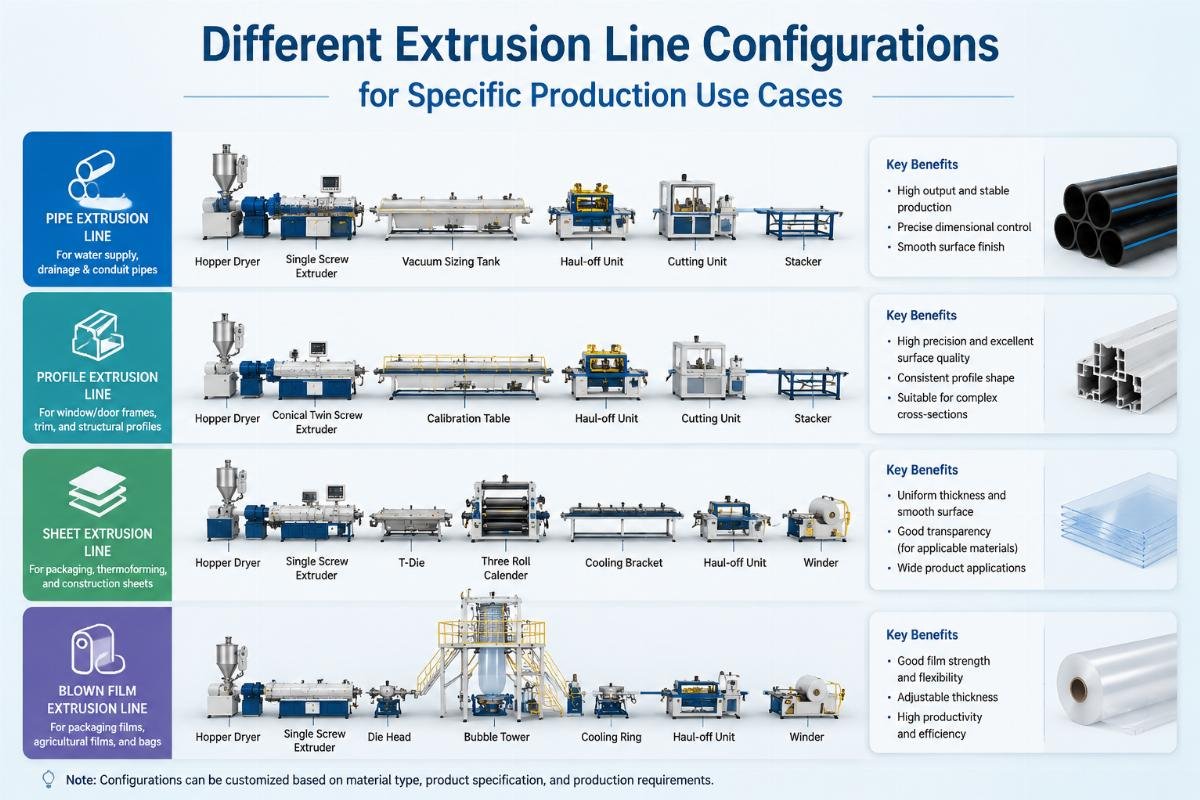
| Downstream Production Lines | Only support one or two end products with no customization for output capacity | Provide full lines for plastic pipes, profiles, sheets, films, granulation, and recycling use cases |
| Spare Part Inventory | Require 4+ week lead times for core wear components | Stock on-site bimetallic screws, nitrided screws, and gearbox components to reduce replacement wait times | [NEED_CITE: Manufacturers with in-house production of core extruder components have a 42% lower parts replacement lead time than those that outsource parts production]
Last quarter, a plastic profile manufacturer based in Vietnam initially selected a smaller supplier that only produced window profile lines, but ran into 6 weeks of production delays when they expanded to WPC decking production and the supplier could not adapt their existing equipment. By switching to a manufacturer with a full 7-category product portfolio, they were able to adjust their line configuration in 10 days and hit their target 1200kg/h output within 3 weeks of on-site installation.
- Material Compatibility Check – Confirm the supplier’s listed extruder models explicitly support the specific plastic resins you use for production, not just generic plastic inputs.
- End-Use Alignment – Verify they have at least 5 reference installations for the exact product type you plan to manufacture, whether that is HDPE water pipes or recycled PET granulation.
- Spare Part Availability – Ask for a list of standard stocked parts to ensure you will not face extended downtime for routine component replacements.
What Competitive Advantages Actually Reduce Your Long-Term operational Risk?
Many suppliers list generic certifications on their website without providing tangible support that reduces your team’s learning curve and post-launch downtime. The most valuable advantages are not just marketing bullet points, but structured services that directly lower your total cost of ownership over the 10+ year lifespan of your extrusion line.
| Supplier Advantage | Common Empty Promise | Verifiable Implementation Standard |
|---|---|---|
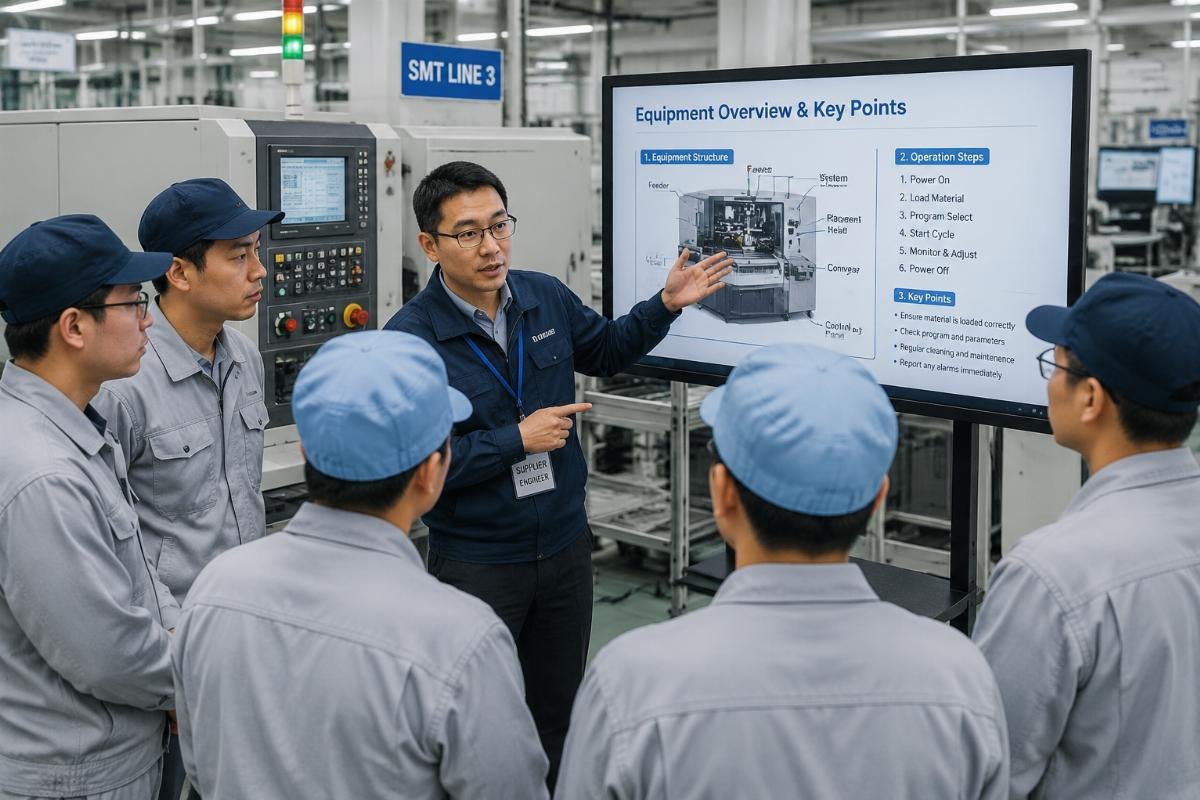
| Installation and Training | Offer only remote video guidance for setup | Provide free on-site engineer dispatch for overseas installation plus hands-on operator training |
| Pricing Position | Claim “low cost” without comparative benchmarks | Offer factory-direct pricing 30-50% below equivalent European brands including Krauss-Maffei, Battenfeld, and KraussMaffei Berstorff |
| Warranty Coverage | Limit support to 1 year with no long-term access | Provide a 2-year full warranty plus lifetime technical support for all system components | [NEED_CITE: Extrusion lines with on-site supported installation have a 68% faster time to full production capacity than those installed via remote guidance]
A recycling business based in Kenya told me last year that they had previously purchased a granulation line from a supplier that only offered remote setup support, and their team took 3 full months to reach their target output because they could not resolve configuration errors. When they upgraded to a line with included on-site installation support, they hit their 800kg/h target for mixed plastic waste processing in 14 days, and saw a 22% reduction in material waste from the first operational week.
- Warranty Documentation Review – Request a written copy of the warranty terms to confirm it covers all core system components, not just individual parts.
- Control System Compatibility – Confirm the line uses interface languages your team is fluent in, including English, Russian, or Spanish, with standard Siemens PLC and Delta VFD hardware.
- Certification Verification – Ask for copies of valid ISO 9001 and CE certification documents to confirm they meet international operational and safety standards.
How to Match a Manufacturer to Your Specific Customer Segment Needs?
No single extrusion manufacturer is the best fit for every type of plastic production operation, and forcing a one-size-fits-all line will always create unnecessary bottlenecks. The right partner will have built their product and support offerings specifically for your use case, rather than trying to serve every possible production segment with generic solutions.
| Customer Segment | Common Misaligned Solution | Segment-Specific Recommended Feature |
|---|---|---|
| Plastic Pipe Producers (Southeast Asia, Africa, Middle East, Latin America) | Generic lines with no focus on high output | Prioritize manufacturers with lines that deliver 500-2000kg/h daily output with automated cutting and stacking functionality |
| Recycling and Granulation Operators | Lines that cannot handle contaminated feedstock | Select integrated washing and drying systems that work with post-consumer waste including PE/PP film, PET bottles, and mixed plastic scrap |
| Distributors and Turnkey Contractors | No flexible pricing for project-based orders | Confirm the supplier supports OEM/private label branding and container-based project pricing | [NEED_CITE: Extrusion lines built specifically for a production segment deliver 31% higher consistent output than generic multi-use line configurations]
A turnkey project contractor based in Mexico that serves small to mid-sized pipe production operations previously worked with a supplier that did not offer flexible MOQ or custom configuration options, and lost 3 separate bids because they could not adjust line specs to match client budget constraints. Once they switched to a manufacturer with a 1-line minimum MOQ and customizable screw configuration, output capacity, and control systems, they won 82% of the bids they submitted in the following 6 months.
- Segment Reference Check – Ask for at least 3 references from operators in your exact customer segment to confirm the line will work for your specific production goals.
- Customization Confirmation – Verify the supplier can adjust core line parameters including screw configuration, output rate, and control system to match your unique requirements.
- MOQ Alignment – Confirm the minimum order quantity matches your project scope, whether you are purchasing a single line for your own facility or multiple units for client projects.
Conclusion
The best extrusion equipment manufacturers do not compete on price alone, they compete on reducing the operational risk that comes with launching or scaling plastic production operations. When you evaluate potential partners, prioritize end-to-end support, application-specific product design, and verified post-sales coverage over generic low price claims. This approach will not only get your production line up and running faster, but will also deliver consistent output for years to come, with far fewer unplanned downtime events that eat into your profit margins.